
IRANZ news briefs
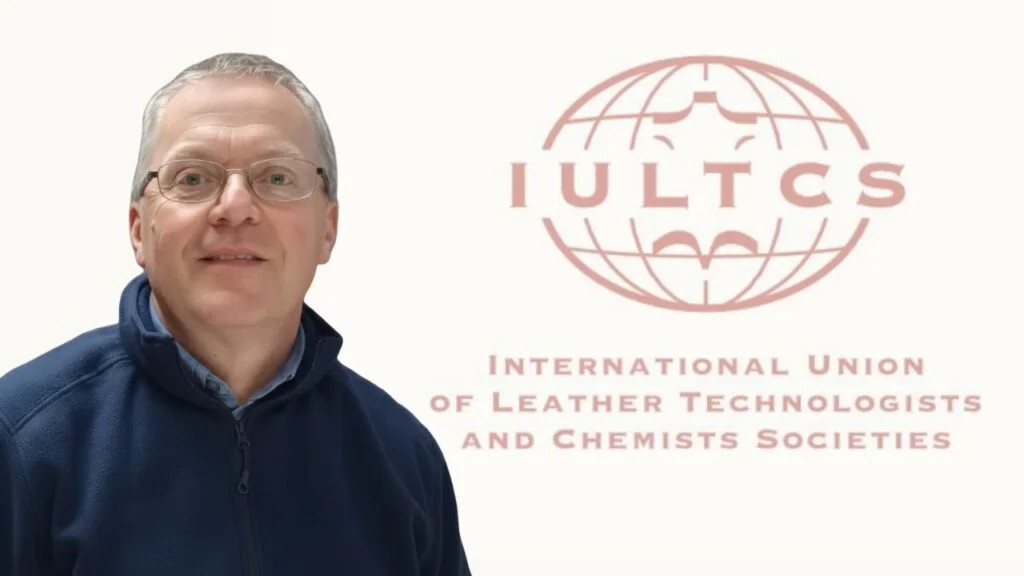
LASRA Director Geoff Holmes takes over as the International Union of Leather Technologists and Chemists Societies (IULTCS) President for 2026-2027. Image: LASRA.
LASRA Director Geoff Holmes appointed IULTCS President
LASRA Director Geoff Holmes has been appointed President of the International Union of Leather Technologists and Chemists Societies (IULTCS) for 2026-2027.
In his incoming message, Geoff described the role as both an honour and a serious responsibility. He noted that the union represents leather science, technology, and chemistry from across the world and depends heavily on the strength of its national member societies. Education, science, publications, communication, and promotion of the leather industry remain the backbone of IULTCS, he said, with active national participation keeping the global body relevant and credible.
Geoff also thanked outgoing President Dr Joan Carles Castell for his leadership and long-term impact, highlighting his work with ISO and CEN leather standardisation as a key contribution that will shape the industry for years.
Malaghan: Ground-breaking cancer treatment within reach
Professor Kjesten Wiig, Director of the Malaghan Institute of Medical Research, writes that for many people with aggressive blood cancers, CAR T-cell therapy represents something extraordinary: a second chance when other options have run out.
“Internationally, it's already changing lives. Here in New Zealand, we're closer than many people realise - but we're also at a critical point where momentum matters.
“At the Malaghan Institute, we're leading that progress. We've developed New Zealand's first CAR T-cell therapy, designed for our health system and people. We've successfully completed a phase 1 clinical trial and are well into phase 2 - treating more than 50 patients so far across New Zealand. This work is real, it's tangible, and it's already making a difference to people's lives.
“That's ground-breaking in itself. But what we're now trying to do is break new ground - by taking steps towards making CAR T-cell and other advanced therapies something New Zealanders can access through our public health system.”
Gillies McIndoe Laboratory Manager receives international Lab Heroes Award
Erin Paterson, Laboratory Manager at the Gillies McIndoe Research Institute, has been named the 2025 recipient of the Lab Heroes Awards™, an international award recognising individuals who make outstanding contributions to research laboratories worldwide.
This year's awards attracted a record number of nominations. Erin was recognised for her exceptional organisation, problem-solving ability, and calm, intuitive approach to laboratory management. Colleagues praised her kindness, patience, and commitment to creating a supportive and safe working environment.
Erin holds a Bachelor of Science in Anatomy and Microbiology from the University of Otago and brings extensive experience from diagnostic and translational research roles in both New Zealand and the United Kingdom.
As part of the award, Erin received USD $3,000 in research vouchers and a USD $1,000 career development grant.
Mātai: Medical research interns complete 10-week experience in Gisborne
A group of summer interns have completed their 10-week programme with the Mātai Medical Research Institute in Gisborne, making meaningful contributions to important scientific projects along the way.
The 2025-2026 interns had sessions on how MRI works, research methods, mātauranga Māori, neuropsychiatry, statistics, and leadership development.
Cawthron seeks nominations for NZ's next Freshwater Champions
Do you know an individual or community making an outstanding contribution to the health of our freshwater environments?
Cawthron Institute has opened nominations for Freshwater Champions — a biennial event recognising those creating positive change for rivers, lakes, wetlands, and estuaries across Aotearoa New Zealand.
Delivered as part of its philanthropic programme, the Freshwater Champions event aims to raise awareness about the importance of freshwater health, celebrate on-the-ground restoration efforts, and share examples of action and innovation from across the country. Winners will be announced at a celebratory event in Nelson this August.
Nominations will be assessed by an independent panel of scientists with expertise in freshwater health and management.
Bragato: Breeding new hybrid grape varieties for New Zealand
New Zealand Winegrowers and the Bragato Research Institute (BRI) have invested in the foundations of a modern grapevine improvement pipeline, securing key research and funding partnerships.
The development and selection of disease-resistant varieties for New Zealand conditions could help deliver and protect sustainability credentials while expanding future opportunities for growers.
International grapevine breeding efforts have increasingly focused on resistance to powdery and downy mildew, with growing industry interest in whether newly bred grape varieties have a place in the future of New Zealand viticulture.
Falling Walls Lab comes to Aotearoa New Zealand
The prestigious Falling Walls Lab is set to take place in Wellington on 23 June 2026 at 11 AM. Hosted at the Royal Society Te Apārangi, this exciting event invites students and early-career professionals from all disciplines to pitch their innovative ideas in just three minutes. Participants will showcase breakthroughs that aim to create a positive impact on science and society.
The event is free and open to the public, offering a unique opportunity to witness cutting-edge ideas and connect with the global Falling Walls community. The winner will receive a trip to the Falling Walls Global Finale in Berlin, Germany, on 6 November 2026.
Applications are open until 8 April 2026. For more information, visit www.royalsociety.org.nz/what-we-do/funds-and-opportunities/falling-walls-lab or email International.Applications@royalsociety.org.nz. Apply now at falling-walls.com/lab/apply and share your groundbreaking ideas!
Malaghan's Homegrown Hope - Stuff's series on CAR T-cell therapy
A revolutionary cancer treatment developed in Wellington has put patients with only months to live into long-term remission and could be ready for the public system by 2027.
In a special series, Stuff senior reporter Nicholas Jones reports on how the breakthrough was achieved and what hurdles remain.
Motu Affiliate Livvy Mitchell graduates with PhD in Economics
Motu Research Affiliate and former Research Analyst Livvy Mitchell recently graduated with a PhD in Economics from Auckland University of Technology.
Motu Research aims to build capability in young researchers and government employees in economic and public policy research. Livvy is an applied micro-econometrician examining health, labour, and crime-related issues, focusing on the social and economic impacts of youth adversity.
In her PhD, Livvy used applied econometric techniques to demonstrate the causal effects of youth suicide and youth victimisation on the health and economic outcomes of affected family members in Aotearoa New Zealand.
Bragato: Planetary facts for New Zealand wine
Bragato Research Institute (BRI) researchers Alice Oswald and Kate Meyer write about their partnership with the Planetary Accounting Network (PAN) and 16 other organisations across New Zealand's Food & Fibre sector to pilot a new environmental assessment and labelling system called Planetary Facts.
The wine industry faces growing market and regulatory demands for evidence of environmental performance. While Sustainable Winegrowing New Zealand (SWNZ) provides a strong foundation for environmental oversight, many producers struggle to translate data into decisions, marketing stories, or export evidence.
LASRA: How leather is becoming the next e-skin super material
Imagine your favourite leather jacket or gloves sensing your vital signs, communicating with a machine, or even healing themselves after a scratch. A groundbreaking innovation is transforming one of humanity's oldest materials into a cutting-edge electronic skin (e-skin).
This leather-based e-skin technology represents a revolutionary leap in traditional leather manufacturing and could disrupt the wearable technology landscape.
Date posted: 23 February 2026