The release of BRANZ's 2026 Research Investment Priorities comes at a time of significant uncertainty for Aotearoa New Zealand's building-research system. With Government proposals to shift administration of the Building Research Levy from BRANZ to MBIE still under consideration, questions remain about the future of independent, industry-led research and the long-term capability it supports.
The Levy has provided an important and relatively stable mechanism for funding research aligned with the needs of New Zealand's building sector. The 2026 priorities focus on four interconnected areas - affordability, resilience, sustainability and quality - highlighting the need for trusted evidence to support a safe, resilient and sustainable built environment. Readers will also find two articles in this newsletter examining the BRANZ and Building Research Levy situation in more detail.
We are pleased to welcome two new IRANZ members whose work also sits within the built environment: Spatial Justice Aotearoa and Urban Intelligence. Their research demonstrates the breadth of expertise within the Independent Research sector. Spatial Justice Aotearoa brings together housing, urban design, planning and architecture to support more equitable and just cities, neighbourhoods and kāinga. Urban Intelligence combines research and technology to address climate and natural hazard risk, adaptation, infrastructure resilience and planning.
Collaboration is a strong theme running through this issue. We highlight a new partnership between the Malaghan Institute of Medical Research and the International Agency for Research on Cancer (IARC), supporting international research into Helicobacter pylori and stomach cancer prevention. We also look at a new relationship agreement between Cawthron Institute and the Department of Conservation, strengthening collaboration in aquatic science, conservation and innovation.
The work of our new member Spatial Justice Aotearoa also illustrates the value of research grounded in community experience. At the Parliamentary Science Forum, Dr Rebecca Kiddle shared findings from the Māori Streets Project, exploring what makes a neighbourhood feel like home and how urban design can support belonging, connection, health and resilience.
Another recurring theme is finding new value in what was previously considered waste. Lincoln Agritech is developing a fibre-to-fibre recycling technology to recover fibres from blended textile waste and return them to new textile production. Meanwhile, Bragato Research Institute is leading the Marlborough Circular Wine Programme, which aims to transform winery lees into a beneficial soil amendment for vineyards.
Together, these stories demonstrate the distinctive contribution of Independent Research Organisations. Whether the focus is health, conservation, housing, climate resilience, textiles or viticulture, research is most valuable when it connects knowledge with real-world challenges and when organisations work together to turn that knowledge into practical outcomes.
As New Zealand considers the future of its research system and the mechanisms that support it, maintaining strong, independent research capability remains essential. IRANZ will continue to advocate for a research environment that values independence, collaboration, long-term capability, and research that delivers tangible benefits for Aotearoa New Zealand.
Dragonfly Data Science now houses "Croissant", an analysis tool that streamlines the process of analysing public submissions. Photo: Dragonfly Data Science.
Cawthron Institute will host the 83rd Annual Thomas Cawthron Memorial Lecture on Tuesday 8 September in Nelson, featuring award-winning environmentalist and author Natalie Kyriacou OAM as keynote speaker.
At a time when environmental, social, and technological challenges are becoming increasingly complex, the ability to make informed decisions has never been more important. Whether responding to climate change, biodiversity loss, pollution, or emerging technologies, communities and decision-makers rely on trusted information and robust evidence to navigate uncertainty and plan for the future.
Yet in an increasingly crowded information landscape, distinguishing evidence from opinion is becoming more difficult. The rapid growth of digital media, social platforms and artificial intelligence is transforming how information is created, shared and consumed, creating new challenges for public trust, scientific understanding and informed decision-making.
This year's lecture, "Truth in a Noisy World: Science, Disinformation and Decisions for Our Future", will explore how disinformation is influencing public understanding and public debate, and what this means for society's ability to respond effectively to complex challenges.
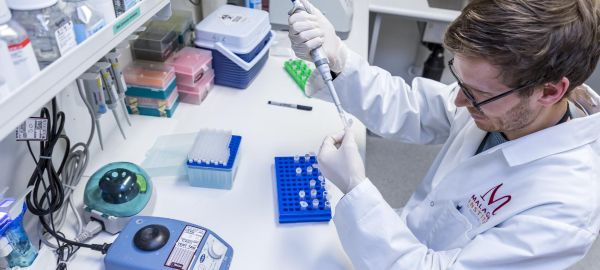
The Malaghan Institute of Medical Research's research into Helicobacter pylori - a bacterium that is the leading cause of stomach cancer - has led to a global collaboration with the International Agency for Research on Cancer (IARC), the cancer research agency of the World Health Organization.
The Memorandum of Understanding will support research into stomach cancer prevention and control by addressing H. pylori infection - including tackling antibiotic resistance, developing screen-and-treat strategies and sharing scientific findings and methods.
Dr Tom Mules says the MOU is recognition that the Malaghan's H. pylori research and expertise has relevance well beyond New Zealand.
"Working with the IARC gives us the chance to contribute directly to the evidence base and toolkit that could shape stomach cancer prevention and control internationally."
The Malaghan Institute's H. pylori clinical research programme has been running since 2024, initially focused on developing new methods to test for antibiotic resistance, and expanding into a number of projects aimed at improving how H. pylori infection is diagnosed and treated.
Globally, stomach cancer ranks fifth in both cancer incidence and cancer-related deaths.
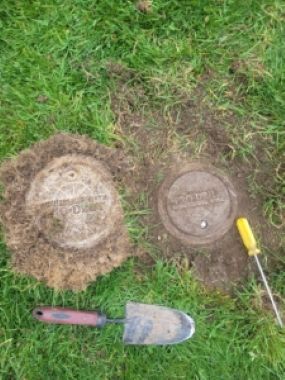
Following the 2010-2011 Christchurch earthquake sequence, a network of piezometers was installed by the Earthquake Commission across Christchurch to monitor shallow groundwater levels. This is referred to as the Automated Piezometer Programme (APP) network. In 2019, ownership of this network was passed to Christchurch City Council (CCC), and CCC engaged Aqualinc to manage this network on their behalf. The network is believed to be one of the largest shallow groundwater monitoring programmes globally.
Each year, the Aqualinc team visits each APP piezometer to download and quality check data, record any changes to site details, process groundwater level information, and provide the data to CCC and Environment Canterbury. The team also undertakes minor repairs where possible and reports sites requiring more extensive remediation. In addition, Aqualinc generates groundwater level statistics for use in mapping studies and other applications.
The high-resolution data collected through the APP network has provided valuable insights into Christchurch's shallow groundwater systems. It has been used to quantify how groundwater level changes can affect local civil infrastructure projects, including sewer replacement and lining works, and to predict groundwater level ranges for construction dewatering projects and ground-source heat pump installations.
Cawthron Institute and the Department of Conservation have signed a new relationship agreement to collaborate on aquatic science, conservation, and innovation.
The agreement reflects the strong alignment between DOC's mission, "Te orango o te ao tūroa | Nature is thriving", and Cawthron's science mission to support thriving aquatic ecosystems. It sets out how the two organisations will work together on shared priorities, including research that improves outcomes for aquatic species and ecosystems, strengthens the management of conservation threats, and supports practical action.
Cawthron Chief Science Officer Dr Cath McLeod says the agreement provides a stronger foundation for collaboration.
"Cawthron and DOC share a strong commitment to protecting and enhancing Aotearoa New Zealand's aquatic environments. This agreement gives us a clearer framework for working together on the science needed to understand and manage threats to indigenous biodiversity, and to turn that knowledge into practical conservation outcomes."
DOC Director Marine and Freshwater Biodiversity Kirstie Knowles says the agreement will help both organisations work more efficiently on shared priorities.
H5N1 bird flu is now in Aotearoa, raising urgent questions about how the country should respond - and what role Māori should have in protecting taonga species. In a new essay, writer and Slowing the Sun author Nadine Hura explores these questions with Te Tira Whakamātaki, Aotearoa's Indigenous Biodiversity network.
Hura examines concerns about the Government's One Health response, including Māori participation in decision-making, the protection of critically endangered species, and the role of tikanga and mātauranga Māori. She speaks with Te Tira Whakamātaki kaimahi taiao Rāwiri Walsh, who argues that doing nothing is not an option when native wildlife is at risk.
The essay also introduces “One Cuzzy”, an Indigenous alternative to One Health that places relationships, whakapapa, and collective responsibility at its centre.
Te Tira Whakamātaki has also launched the Mātaki Māori Biosecurity Network's HPAI Reporter, enabling communities to report sick or dead wildlife and document the resources required to respond.
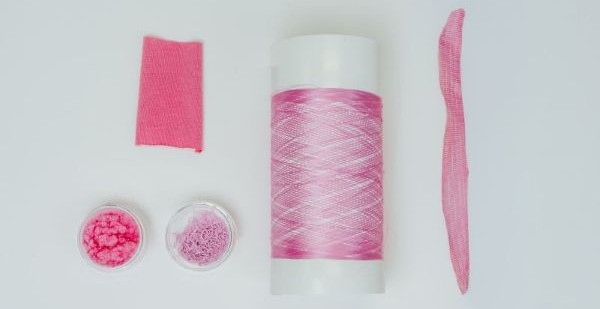
Lincoln Agritech is developing a novel fibre-to-fibre textile recycling technology aimed at tackling one of the industry's biggest circularity challenges: blended fabrics.
Traditional recycling methods often struggle to recover value from blended and lower-purity textile waste, resulting in materials being downcycled or sent to landfill. Lincoln Agritech's green chemistry process separates blended textiles into their constituent fibres, enabling them to be recovered and re-spun into new textile feedstock of comparable quality.
The technology is designed for containerised deployment at manufacturing sites, targeting post-industrial textile waste before it enters the waste stream. Interest in the innovation was reinforced at the Textiles Recycling Expo 2026 in Brussels, where industry discussions highlighted growing momentum behind circularity, advances in recycling technologies, and the importance of collaboration across the textile value chain.
Following positive industry feedback, KiwiNet is supporting the next stage of development, including additional testing, environmental assessment, intellectual property protection and commercialisation planning, helping position the technology for future investment and industry adoption.
Lincoln Agritech has developed a sustainable fibre-to-fibre conversion process that can separate and re-spin complex textile composites. Photo: Lincoln Agritech.
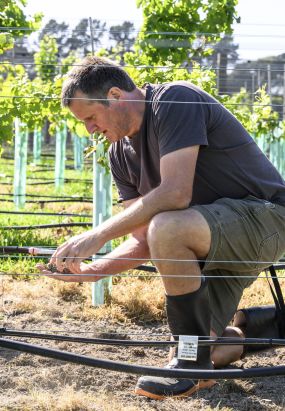
Thousands of tonnes of Marlborough winery waste could be transformed into a valuable resource for vineyards through a new regional programme led by Bragato Research Institute.
The Marlborough Circular Wine Programme will collect winery lees, the sediment left over from winemaking, and combine it with materials such as compost and biochar to produce a safe, beneficial soil amendment. The initiative aims to reduce waste and emissions while returning organic matter and nutrients to vineyard soils.
Large volumes of lees are produced over a relatively short winemaking period during and after vintage. They can be expensive to dispose of and place pressure on regional wastewater and waste-management infrastructure. As disposal costs rise and environmental expectations increase, Marlborough wineries need a more sustainable regional alternative.
"Marlborough wineries produce large volumes of solid and liquid lees, which is currently treated as waste," says Programme Leader Dr Seth Laurenson. "Our goal is to create a coordinated regional system that safely returns that organic matter and its nutrients to vineyard soils."
Wineries will pay a disposal fee designed to be competitive with landfill costs, with the finished product returned to participating vineyards at no additional cost.
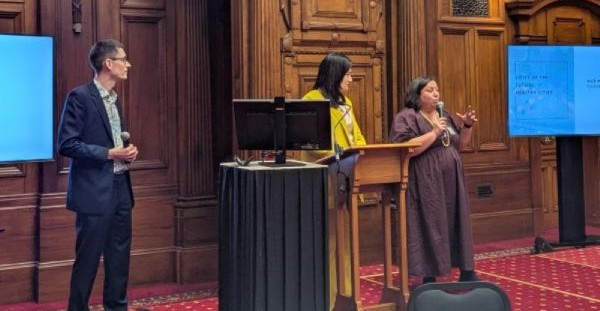
The Parliamentary Science Forum held in late June focused on how to design cities to promote safety and health. Dr Rebecca Kiddle, Co-Director of Spatial Justice Aotearoa, presented research on what Māori communities want in their neighbourhoods, and how to plan and build cities to promote social connection, green spaces, climate resilience, and shared decision-making.
"Streets are not usually framed as a health issue. The Māori Streets Project asked a simple question: what does a street that feels like home actually look like? We surveyed 288 Māori participants and ran co-design wānanga across the country. The headline finding was stark. Māori living in papakāinga rated their street ten out of ten for feeling like home, like a Māori street. Everyone else averaged two. That gap is not about decoration. In our data, the more your street feels like yours, the more connected you feel and the more your needs are met. We have been treating healthy cities as a problem of parks and cycleways. Māori told us it is a problem of belonging."
Dr Parmjeet Parmar MP, centre, with Prof Malcolm Campbell, University of Canterbury, and Dr Rebecca Kiddle, Spatial Justice Aotearoa, answering questions from Members of Parliament at the Parliamentary Science Forum held in late June. Photo: Royal Society of New Zealand Te Apārangi.
New research from BRANZ shows homes are warmer in winter than in the early 2000s, but many bedrooms still fall below recommended temperatures overnight.
The findings come from the Household Energy End-use Project 2 (HEEP2) - New Zealand's most comprehensive study of indoor temperature conditions and energy use since the original HEEP research. The indoor temperatures report, published today, is the first in a three-part series, with reports on indoor moisture and household energy use to follow.
HEEP2 builds on the original HEEP study (1999-2005), enabling direct comparison over time. It includes more than 750 households across New Zealand, with a subset of homes monitored continuously for 12 months to measure electricity use and track temperature and humidity in living areas and bedrooms. The data spans regions and housing types, providing a national picture of how New Zealanders live.
New Zealand living rooms are warmer in winter than they were two decades ago, with average temperatures up 2.6-3.5°C across the day. Evening living rooms now average 20.4°C, above the recommended minimum of 18°C.
Dr Maia Brewerton (Ngāti Porou, Ngāti Kahungunu) is a clinical immunologist, immunopathologist, head of several immunology labs and also sits on the board of the Malaghan Institute. Based out of Auckland Hospital, she's been working with patients with allergic and inflammatory conditions for over twenty years. Needless to say, she knows a thing or two about allergies and how to treat them.
Our understanding of allergies has come a long way in the past twenty years. The way we diagnose and treat these diseases has changed dramatically too. As someone who sits at both ends of the spectrum - from basic research all the way to clinical application - Maia is uniquely positioned to see first-hand what these changes mean not just for researchers, but for patients and their families, and where this exciting field of research is heading.
"I've been in the field of immunology for more than two decades and one of the biggest paradigm shifts I've seen is in the food allergy space," says Maia.
Food allergies and intolerances usually develop in early childhood and can range from mild to severe. It can be incredibly stressful for parents to know what to do to decrease the likelihood of their child developing a potentially life-threatening food allergy. No one wants to find out after it's too late.
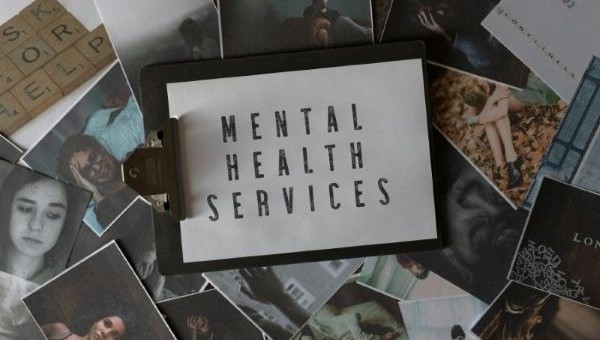
Adolescence and young adulthood are sensitive periods for the development of mental distress, and timely support can prevent early signs of distress from escalating.
A recent review by Motu sociologist and demographer Dr Kate Prickett examines the effectiveness of early intervention and secondary prevention approaches for supporting the mental health and wellbeing of young people and rangatahi aged 12-24 years, with a particular focus on those experiencing low to moderate distress.
The review draws on a structured scan of published and grey literature, identifying 20 evaluation papers covering 16 interventions across therapy-based brief interventions, community-based services, e-therapy, digital tools, and family-integrated approaches.
Overall, the evidence suggests that many early intervention and secondary prevention supports, including brief and low-intensity approaches, can reduce distress and improve wellbeing, functioning, and coping. Effects were most consistent for broad outcomes such as distress, wellbeing, and functioning, while findings for anxiety and depressive symptoms were more mixed.
Accessibility, youth-friendly delivery, sustained engagement, and co-design with young people emerged as important enablers of effectiveness.
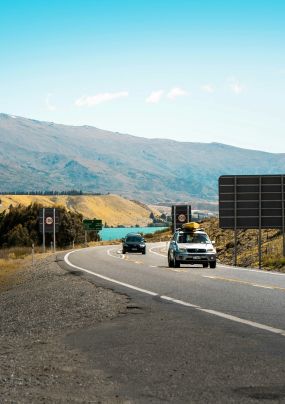
Mackie Research has carried out a new study examining fatal road crashes, using a Safe System approach to better understand the combination of factors involved.
The recent report, Contributing Factors to Fatal Crashes: A Safe System Analysis of Contextual Factors, was prepared by Sam Wrightson, Hamish Mackie, Rebecca Luther, Julia Mackie, Emily Mackie and Maxwell Wrightson, and funded by the AA Research Foundation.
The study analysed 200 fatal crashes from 2024, representing around 80% of road fatalities that year. It found that 99% involved more than one Safe System failure, with 56% involving failures across all four pillars: roads and roadsides, speed, vehicles, and road users.
While extreme behaviours such as excessive speed or impaired driving were present in about half of fatal crashes, Mackie Research Director Julia Mackie says the findings reinforce that fatal crashes rarely have a single cause. "People make mistakes, but the wider system needs to be designed so those mistakes do not result in death or serious injury."
The research identifies persistent patterns including rural run-off-road and head-on crashes, vehicle safety issues, and crashes involving pedestrians, cyclists, and motorcyclists.
WSP has taken delivery of a new towable coring rig for testing the strength of newly constructed roads. The rig, from UK manufacturer Xcalibre, replaces an older unit that had been in service since 1975.
WSP team leader for testing services Zac Francis says taking core samples is a vital part of road engineering and construction. It helps ensure materials meet national standards and project specifications.
The new rig can collect samples from all road layers, including base course, sub-base, and asphalt. It can take samples using wet and dry coring methods and can accurately reach the right part of the road thanks to a side-shift drilling feature. Core samples are taken back to the WSP laboratory and tested for strength, density, and air voids to check the road meets specifications and will perform as expected during its design life.
Zac says core sampling also provides a useful comparison between laboratory results and real-world performance.
"Materials produced and tested in the lab are assessed under ideal conditions, but on a construction site factors such as weather, equipment and workmanship can all affect the final result. By testing samples taken directly from the road, we can see if the required standards have been achieved in practice."
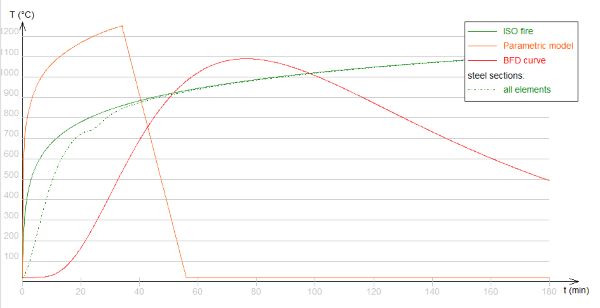
HERA engineers are highlighting the growing complexity of structural fire engineering, noting that while individual fire calculations are relatively straightforward, managing multiple scenarios and assumptions across modern projects can be more complex.
Senior Structural Fire Engineer Mayank Shrivastava said engineers routinely assess how steel structures perform under fire conditions by developing design fire curves, modelling heat transfer, determining critical temperatures and specifying protection systems.
However, changes to factors such as compartment geometry, fuel load, ventilation, section factors and protection thickness can significantly alter the calculations required.
According to Mayank, real-world projects often involve numerous combinations of protection systems, compartment layouts, and fire scenarios, all of which must be assessed within tight timeframes.
Mayank noted that differing assumptions between engineers - including the use of different fire curves, critical temperatures, or section factor conventions - can lead to varying results for the same structural member, increasing the time needed for design reviews and verification.
He said the shift toward performance-based fire engineering is increasing the number of scenarios that must be assessed, placing greater emphasis on engineering judgement.
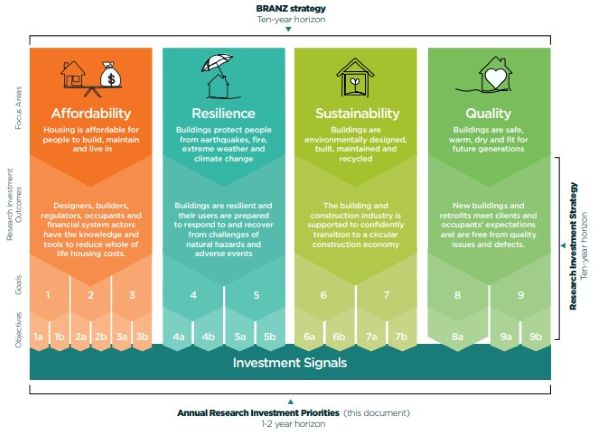
BRANZ's newly released 2026 Research Investment Priorities arrive at a moment of both continuity and uncertainty for Aotearoa New Zealand's building and construction research system. Continuity, because the document sits firmly within BRANZ's established ten-year strategic framework, shaped by the organisation's four enduring focus areas: Affordability, Resilience, Sustainability and Quality. Uncertainty, because the Government has proposed legislative changes that would shift administration of the Building Research Levy from BRANZ to MBIE - changes that, as the document notes, "had not been passed into legislation" at the time the funding round opened. Against this backdrop, the 2026 Priorities reaffirm BRANZ's commitment to evidence-based investment, sector collaboration, and practical research that delivers measurable impact.
At the heart of the document is BRANZ's overarching aspiration for "affordable, resilient, sustainable and quality buildings for Aotearoa New Zealand". This aspiration is not merely rhetorical; it is embedded in a structured line of sight that links the BRANZ Strategy, the Research Investment Strategy, and the annual Priorities. The Strategy sets out the long term outcomes BRANZ seeks to achieve, such as housing that is affordable to build and maintain, buildings that protect people from natural hazards, a construction sector that can transition confidently to a circular economy, and new buildings and retrofits that are free from defects. The Research Investment Strategy then translates these outcomes into goals and objectives, while the annual Priorities identify the specific areas of work that BRANZ will fund over the next one to two years. This layered approach ensures that each funding round contributes to a coherent long term direction.
A new series of policy briefs from Cawthron Institute and research partners is shining a light on how past decisions have shaped the way freshwater fish are managed in Aotearoa New Zealand today.
Freshwater fish are woven through New Zealand's history and identity, from eel (tuna) and whitebait, to trout and salmon. They have sustained whānau, supported cultural practices, underpinned recreational traditions, and helped shape local economies.
But according to Fish Futures researchers, the way freshwater fish are managed has not always reflected the importance of these species to communities and ecosystems.
Six recently published Fish Futures policy briefs examine the histories of freshwater fish management in Aotearoa New Zealand, exploring how past decisions have contributed to the challenges now facing freshwater ecosystems, fisheries, and the people who depend on them.
Cawthron Institute social scientist Kiely McFarlane says the briefs are designed to help decision-makers, kaitiaki, fishery managers, and communities understand how today's problems developed, and what might need to change. They were co-developed with cultural heritage specialist Ailsa Cain and geographer Marc Tadaki, providing a holistic understanding of New Zealand's environmental history.
Good news for many rural landowners - if your bore or drinking water supply serves fewer than 25 people, you may no longer need to register as a drinking water supplier with Taumata Arowai. If your supply is still considered a regulated drinking water supply, the compliance requirements have also been simplified.
If you supply water to multiple households as a shared domestic supply serving fewer than 25 people, and the water is only for domestic use, you are generally no longer considered a regulated drinking water supplier and do not need to register your water supply.
However, if your supply also provides drinking water for employees, or additionally supplies a public, commercial, or community facility (for example, a café, marae, or hall), it will likely still be considered a regulated drinking water supply.
If your supply is required to be registered, you have a legal obligation to provide safe drinking water and meet the requirements of your supply size category. Water suppliers can choose between two compliance pathways: Follow the requirements of the relevant supply category (eg: Very Small Community Supply, Small Supply) under the Drinking Water Quality Assurance Rules; or follow a pre-defined 'Acceptable Solution'. Acceptable Solutions are ready-made solutions that specify the treatment, monitoring, and management requirements for common types of drinking water supply.
Immunotherapies have transformed outcomes for many patients, training the immune system to recognise and attack tumours more precisely. But these therapies don't work for everyone, and right now, there's often no way to know in advance who will respond. For patients dealing with a serious illness, that can be time and hope wasted on a treatment, with none of the payoff.
"The fact that we even call all of these diseases cancer is kind of ridiculous," says Kate Nicholls, a PhD student in Malaghan's Hermans Laboratory who has spent the last few years immersed in cancer research.
What she means is that no two tumours are truly alike, and treatment should reflect that. Liver cancer and blood cancer, for instance, fall under the same umbrella term, 'cancer', she points out, yet they behave completely differently. Even two patients with the same diagnosis can have tumours that are completely different: different causes, different biology, different outcomes. Every tumour carries its own fingerprint, and that variation is a big part of why immunotherapies can be unpredictable. Making sense of it sits at the centre of Kate's PhD.
For Kate, the goal isn't just understanding cancer, it's making sure the right patients get the right treatment.
A three-year PhD project at the University of Auckland, in collaboration with Bragato Research Institute, has shed new light on the complex factors behind reductive off-aromas in New Zealand Pinot Noir.
Sukhpreet Kaur Gill's research, conducted over three vintages at BRI's Research Winery, found elemental sulphur was the most consistent factor influencing volatile sulphur compounds (VSCs), which can produce aromas ranging from rotten egg and onion to struck match.
The study also revealed important interactions between sulphur, nitrogen availability and whole-bunch fermentation. High sulphur and nitrogen, combined with 75% whole-bunch inclusion, produced particularly elevated levels of compounds associated with onion and cooked cabbage aromas.
Copper timing also proved significant. Pre-fermentation additions reduced some VSCs without leaving meaningful residual copper, while post-fermentation additions could leave higher residual levels and potentially contribute to VSC release during bottle ageing.
The research highlights that reductive aromas are not caused by a single factor, but by decisions made from vineyard to bottle.
BRANZ has recently published an article outlining concerns about the potential impact of proposed changes to its funding model on New Zealand's long-term building research capability.
Architectural Designers New Zealand chief executive Keryn Davis says BRANZ's value extended beyond its current research to the capability, expertise and knowledge it had built over decades.
"The proposed funding changes raise legitimate concerns about the future of specialist facilities, highly skilled researchers, and the long-term research programmes that help us understand how buildings and materials actually perform over time in New Zealand's unique conditions. These capabilities are a national asset," she said.
The article highlights concerns that long-term research programmes, including studies on weathertightness, seismic resilience, and fire safety, rely on stable funding over many years. It also notes concerns that changes to the funding model could affect specialist expertise and institutional knowledge.
Engineering New Zealand chief executive Richard Templer says: "We need long-term research. For example, weathertightness issues are generally not something you notice in the first year. To study it and find solutions, you're talking about projects that take years, not months."
New research from Motu Economic and Public Policy Research has found that workers in the industries hardest hit by the Covid-19 pandemic were, perhaps surprisingly, slower to get vaccinated than those in less affected industries.
Researcher Richard Fabling found this pattern was not driven by the industries themselves, but by differences in the characteristics of the people working in them. Employees in less affected industries were generally more highly qualified and more likely to have previously received influenza vaccinations - two factors strongly associated with earlier Covid-19 vaccination.
The findings suggest these patterns may reflect differences in access to, and engagement with, the healthcare system rather than simply attitudes towards vaccination.
The research highlights an opportunity for employers to help improve vaccine uptake during future pandemics. Encouraging annual influenza vaccination through free or subsidised workplace programmes could help normalise vaccination and reach workers who are less connected to healthcare services. Fabling also suggests future pandemic responses should consider whether positive incentives and encouragement can achieve more than mandates and restrictions alone.
Research by Motu Economic and Public Policy Research has shed new light on the economic impact of Auckland's region-specific Covid-19 lockdowns, finding the restrictions had a substantial but relatively short-lived effect on business activity.
Researcher Richard Fabling analysed the impact of the lockdowns on firm sales revenue and expenses using a matched difference-in-difference dataset covering almost all private sector firms in New Zealand. The study compared Auckland businesses with a control group of firms in Christchurch to estimate the effect of the restrictions.
The analysis assumes a best-case scenario in which Covid-19 itself had no effect on Auckland's regional economy in the absence of lockdowns. Under that assumption, the initial reduction in sales for Auckland firms was similar in magnitude to the impact experienced by the businesses most affected by the Canterbury earthquakes, although the disruption was shorter in duration and closely matched the lockdown period.
The research also found that, while the initial nationwide lockdown appeared to have a greater overall impact, Auckland firms adapted relatively well to subsequent regional restrictions. The study was completed while Richard Fabling was Chief Researcher at the New Zealand Royal Commission on Covid-19 Lessons Learned.
Malaghan: Our Changing World - Building NZ's RNA capabilities
Malaghan RNA technology experts and pillar leads for the RNA Development Platform Dr Lisa Connor and Dr Rebecca McKenzie talk to Dr Claire Concannon from RNZ's Our Changing World about increasing New Zealand's capacity in RNA technology.
The quality of New Zealand's waterways is suffering, and the head of a not-for-profit research and development organisation says public discussions about who or what's responsible for it can lack nuance. Since 1964, Lincoln Agritech has been trying to deliver tech solutions to the market to address environmental concerns. They've also been monitoring river and groundwater systems across the country. Professor Travis Glare, chief executive spoke to John Campbell.
Cawthron: Stopping invasive marine pests from spreading
How can we stop invasive marine pests from spreading around New Zealand's coasts on boats? One important tool is the Level of Fouling Scale, which provides a simple and consistent way to assess biofouling on boat hulls.
IRANZ has gone social. For up-to-date information about the activities of our member organisations and notification of updates to the website follow us on the link below.
IRANZ is an association of independent research organisations. Its members undertake scientific research, development or technology transfer. Members include Aqualinc Research Ltd, Bragato Research Institute, BRANZ, Cawthron Institute, DigiLab, Dragonfly Data Science, Gillies McIndoe Research Institute, HauHau Research, Heavy Engineering Research Association (HERA), International Global Change Institute (IGCI), Leather & Shoe Research Association (LASRA), Lincoln Agritech Ltd, Mackie Research, Malaghan Institute of Medical Research, Manawatū AgriFood Digital Lab, Medical Research Institute of New Zealand (MRINZ), Mātai Medical Research, M.E Research, Motu Economic and Public Policy Research, National Transport Research Organisation (NTRO), Scarlatti, Spatial Justice Aotearoa, Takarangi Research Group, Te Tira Whakāmataki, Urban Intelligence, and WSP Research.
Contact: Dr Rob Whitney, Executive Officer, mobile: +64 27 2921050, email: information@iranz.org.nz